

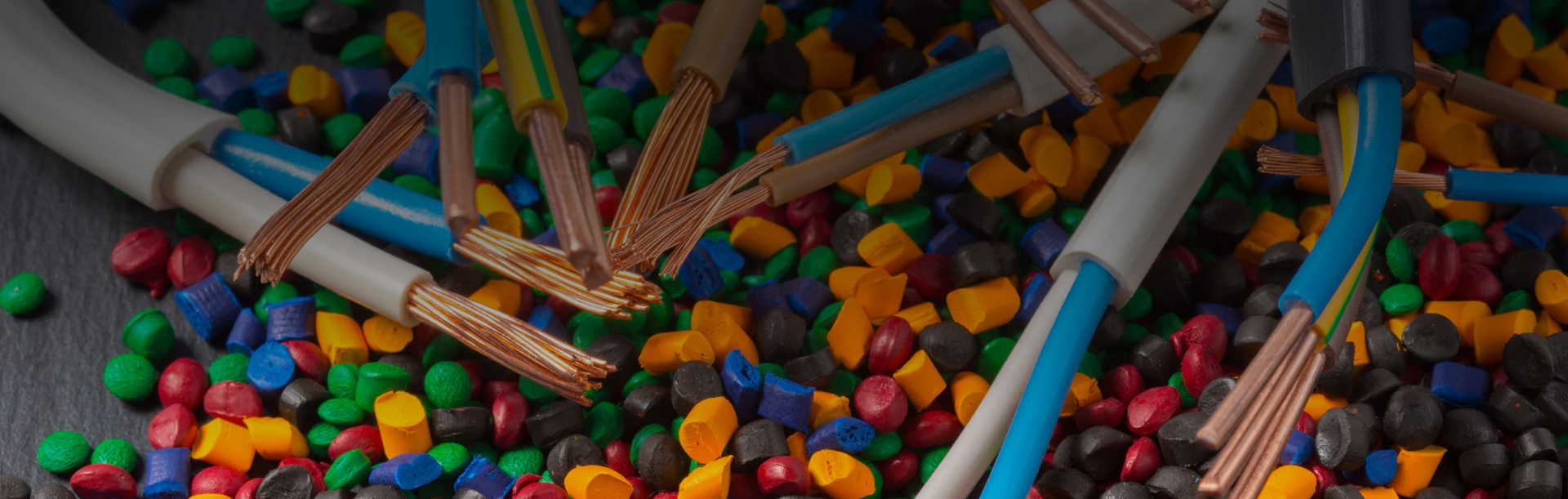
통신 케이블용 LSZH 화합물의 화재 안전 준수 및 할로겐 프리 검증
인프라 및 통신 네트워크의 글로벌 시장에서 **의 사양 통신 케이블용 LSZH 화합물 **는 엄격한 화재 안전 규정에 따라 협상할 수 없는 요구 사항입니다. Low Smoke 제로 Halogen 소재를 사용하여 연소 시 짙은 연기와 부식성, 독성 가스의 배출을 방지하여 인명과 민감한 전자 장비를 보호합니다. 케이블 제조업체의 경우 규정 준수 여부를 확인하려면 엄격한 **할로겐 없는 화합물 테스트** 절차와 특정 **LSZH 낮은 연기 밀도** 요구 사항을 준수해야 합니다. Hangzhou Meilin New Material Technology Co., Ltd.는 30년 이상의 경험과 3개 공장에 걸쳐 31개의 고급 생산 라인을 보유하고 있으며 고품질 LSZH 화합물 제조를 전문으로 하며 국내외 고객 모두에게 규정 준수와 우수한 성능을 보장합니다.
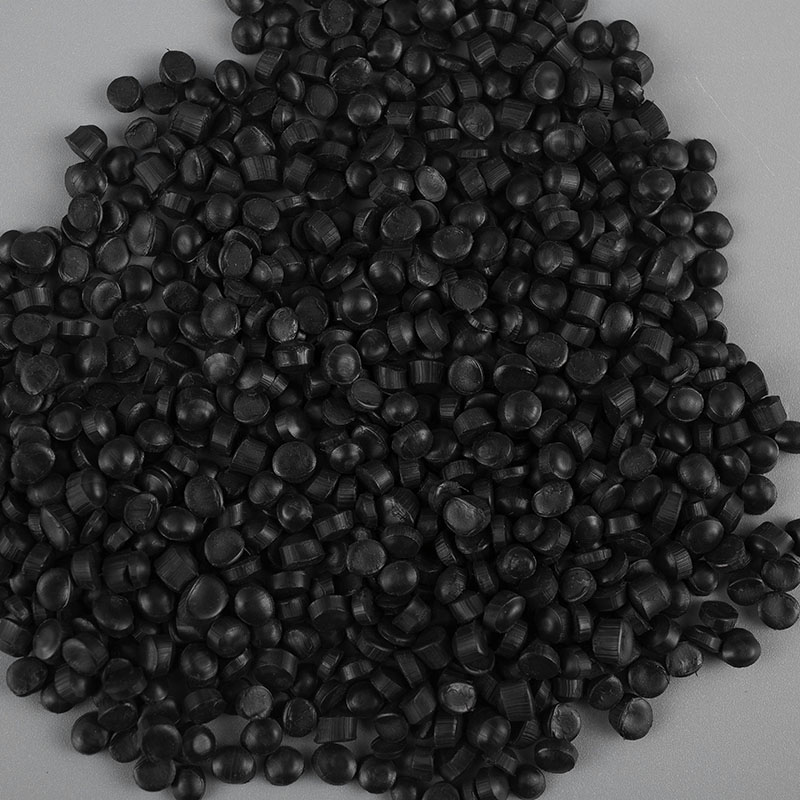
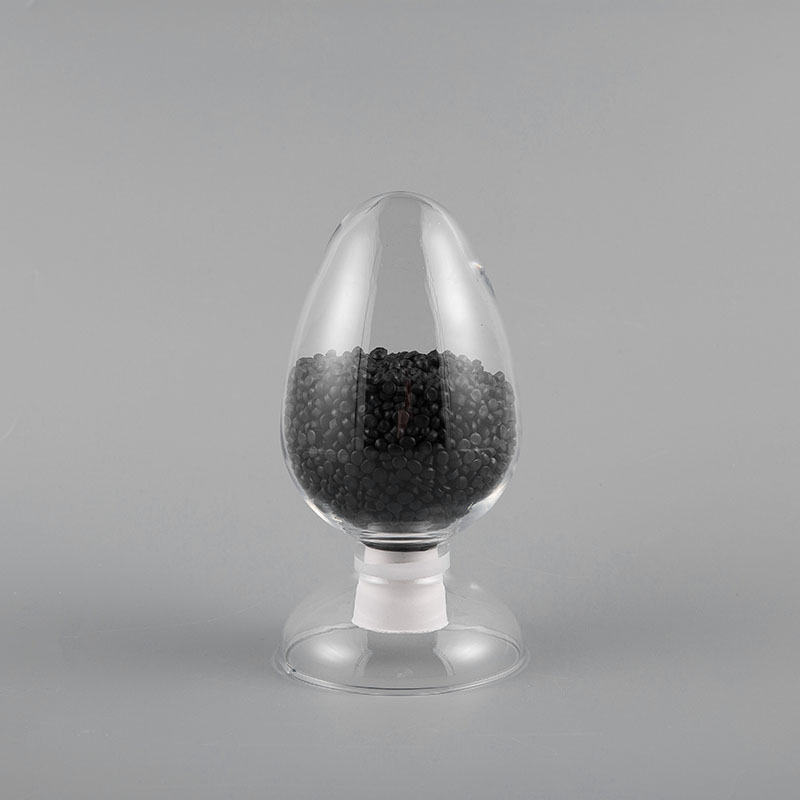
ML- TH9002B2 열가소성 LSZH 난연 B2ca 등급 외장재
할로겐 프리 검증 및 독성
LSZH의 핵심 원리는 부식성이 강한 연소 생성물을 제거하는 것입니다.
실행 중 할로겐 프리 화합물 테스트 절차
To confirm that a product qualifies as halogen-free, rigorous **Halogen-free compound testing** procedures must be conducted, primarily the IEC 60754 series. This involves burning the material under controlled conditions and measuring the acidity (pH) and conductivity of the resulting combustion gases. The standard mandates that the pH value must be above $4.3$ (indicating low acidity) and the conductivity must be below $10 \mu\text{S}/\text{mm (indicating minimal ionized corrosive content). This ensures the material does not pose a threat to people or cause corrosion damage to nearby infrastructure.
Comparing Halogenated vs. Halogen-Free Compounds
The chemical difference between traditional and modern compounds is vital. Standard materials like PVC rely on chlorine (a halogen) to achieve fire retardancy, but combustion releases highly toxic and corrosive Hydrogen Chloride (HCl) gas. **LSZH Compounds For Communication Cables**, conversely, achieve flame retardancy through large loadings of metal hydroxides (e.g., magnesium hydroxide). When heated, these hydroxides decompose endothermically, releasing water vapor to cool the flame and forming a protective char layer, effectively eliminating acid gas release.
Comparison: Compound Type vs. Acid Gas Emission and Environmental Impact:
| Compound Type | Halogen Content | Acid Gas Release During Fire (Corrosivity) |
|---|---|---|
| PVC (Halogenated) | High | High (Releases HCl) |
| 통신 케이블용 LSZH 화합물 | Zero | Negligible (Neutralized by metal hydroxides) |
Flammability and Smoke Density Control
Beyond acid gas, controlling the spread of fire and maintaining visibility are crucial safety factors.
Interpreting Flammability testing standards for cable jackets
Verification of flame spread resistance relies on strict **Flammability testing standards** such as IEC 60332. The single cable vertical flame test (IEC 60332-1-2) confirms that the jacket material is self-extinguishing and will not propagate the flame. For large installations, more demanding bundle tests (IEC 60332-3) are required. B2B buyers should also review the Limiting Oxygen Index (LOI) of the compound; a higher LOI value (typically $> 30\%$) indicates a stronger resistance to ignition and combustion.
Meeting stringent LSZH low smoke density requirements
The primary threat in enclosed fires is smoke inhalation and loss of visibility, which hinders evacuation. The IEC 61034 standard dictates how **LSZH Compounds For Communication Cables** must perform regarding smoke emission. The test measures the percentage of light lost over a specified path length when the cable is combusted. Achieving **LSZH low smoke density** requirements means the material must maintain a high percentage of light transmittance (typically $> 60\%$) throughout the test, a key performance metric for **LSZH materials for data cable** jacketing used in tunnels and subways.
Manufacturing Considerations and Performance
Compound processability is tied directly to manufacturing efficiency and final product quality.
Processing characteristics of LSZH for high-speed extrusion
The **Processing characteristics of LSZH** are inherently complex due to the heavy loading of non-polymeric mineral fillers required for fire retardancy. This high filler content affects the compound's viscosity and melt strength. Manufacturers must select compounds specifically optimized for high-speed extrusion lines. Poor **Processing characteristics of LSZH** can lead to extruder surging, material degradation, and surface roughness on the final cable jacket, requiring specialized extrusion equipment and precise temperature control.
Applying LSZH materials for data cable jacketing
When using **LSZH materials for data cable** jacketing (e.g., Cat 6, Cat 7), the compound must meet two sets of demanding criteria: fire safety *and* electrical performance. **LSZH Compounds For Communication Cables** used for high-frequency data transmission must have a stable, low relative permittivity and low dissipation factor to minimize signal attenuation and maintain the necessary bandwidth capacity. Compromising on the electrical properties of the **LSZH materials for data cable** jacketing for the sake of fire performance is unacceptable in modern networks.
Conclusion
Sourcing **LSZH Compounds For Communication Cables** is a critical engineering decision that balances fire safety compliance with manufacturing efficiency. Success depends on selecting materials that have passed stringent **Halogen-free compound testing** procedures, meet demanding **LSZH low smoke density** requirements, and exhibit excellent **Processing characteristics of LSZH**. Hangzhou Meilin New Material Technology Co., Ltd. leverages its technological expertise, advanced production lines, and commitment to R&D to provide high-quality **LSZH materials for data cable** jacketing and other specialized compounds that consistently meet global **Flammability testing standards** and performance expectations.
Frequently Asked Questions (FAQ)
- What is the key chemical mechanism that enables **LSZH Compounds For Communication Cables** to reduce smoke? **LSZH Compounds For Communication Cables** often contain high loadings of inorganic metal hydroxides (like Al(OH)}_3$ or Mg(OH)}_2$). When exposed to heat, these compounds release water vapor and form a dense char layer, which acts as a barrier to suppress smoke formation.
- **할로겐이 없는 화합물 테스트** 절차(IEC 60754-2)에서 일반적으로 허용되는 pH 범위는 무엇입니까? IEC 60754-2 표준에서는 연소 가스에서 나오는 수성 추출물의 pH가 규정을 준수하고 비부식성인 것으로 간주되기 위해 $4.3$보다 커야 한다고 요구합니다.
- Why is the **LSZH의 가공 특성** often more difficult than PVC? **통신 케이블용 LSZH 화합물** contain significantly higher volumes of inorganic solid fillers (up to $60\%$) required for fire suppression. This high filler content increases the compound's viscosity, making it more difficult to process smoothly and rapidly on high-speed extrusion lines compared to unfilled or lightly filled PVC.
- How does the choice of **데이터 케이블용 LSZH 소재** 재킷 affect Cat 6A performance? 높음-speed data cables require jackets with a low, stable Dielectric Constant ($K$) to minimize signal loss (attenuation). If the **LSZH materials for data cable** jacketing formulation has a high $K$ value or inconsistent mixing, it can degrade the cable's impedance and fail to meet Cat 6A transmission 요구 사항.
- Is passing the IEC 60332-1 test sufficient for a **LSZH 낮은 연기 밀도** claim? 아니요. IEC 60332-1(수직 화염 확산)을 통과하면 난연성만 확인됩니다. **LSZH 낮은 연기 밀도** 주장은 연소 중 빛 투과율을 측정하는 IEC 61034 표준을 사용하여 별도로 검증해야 합니다.
-
 추가하다:
추가하다:절강성 항저우시 린안구 싱위 거리 259호
-
 전화/팩스:
0571-63763088
-
 이메일:
이메일: -

-
문의하기 창의적인 프로젝트를 원하시나요? 생산적인 이야기를 나눠보자.
저작권 © 항저우 메이린 신소재 기술 유한 회사 모든 권리 보유. 맞춤형 전선 및 케이블 재료 제조업체
